Monday, March 4, 2019

Thursday, February 28, 2019
Gilroy's Theory Applied To Television Drama
Evaluate the relevance of Gilroy's ethnicity theory to a long form television drama?
Gilroy's ethnicity theory argues that the African culture has, thanks to the British Empire, composed a culture where all the African, America, Caribbean, and British are referred to as the 'Black Atlantic'. The limits of this theory being applied to a television drama surrounds itself on how it was first made and applied in relation to the British Empire. Neither America or Iceland has ever been an Empire before in their history.
Gilroy's theory can be applied to one of the long form television drama shows I have studied, Homelands. Gilroy's theory talks about the way in which possibly white people are more so in power. This could be applicable to Homelands in the way that the show is completely racist in the way it spreads unfair and unjustified propaganda surrounding many regions of the middle eastern society. As the theory suggests, generalising and grouping a quite diverse society as one strict set of Muslim people, who as the show suggest one have one goal. Homelands is caught generalising the middle eastern society many times through their first season of the show. And in recent history, Homelands ran into another controversy in regards to their set being de-faced with a response to the realism from the point of view of someone coming from the middle eastern society. Homelands is a long form television drama that was made popular from the very first season. Overall the theory that Gilroy has suggested, it defiantly fits into the main aspects of this.
In Trapped, another television drama I have studied, is much more subtle in the way that they approach race and ethnicity. The way that Trapped explores Gilroy's theory is through the lack of major black character in the first season. This could be taken up one of two ways. Either Trapped was trying clearly state white people as more of a supreme race. this could be further applied to roles that black people play in Trapped, the chef is the only black male in the show and he takes orders from the captain, a white middle aged male. Other black characters in Trapped include two girls found in the back of the camper van, two venerable children helpless and scared. However, the produces for Trapped could have been giving an accurate representation of Iceland and how there is 95% margin of white people living in Iceland today. This could be taken either way and therefore may or may not fully fit into Gilroy's ethnicity theory.
In conclusion, the way in which Gilroy's theory can be fully applied to both television dramas is a clear representation in his theory being correct and present in the media today. He states that the generalisation of black people is present ever since the British Empire.
Gilroy's ethnicity theory argues that the African culture has, thanks to the British Empire, composed a culture where all the African, America, Caribbean, and British are referred to as the 'Black Atlantic'. The limits of this theory being applied to a television drama surrounds itself on how it was first made and applied in relation to the British Empire. Neither America or Iceland has ever been an Empire before in their history.
Gilroy's theory can be applied to one of the long form television drama shows I have studied, Homelands. Gilroy's theory talks about the way in which possibly white people are more so in power. This could be applicable to Homelands in the way that the show is completely racist in the way it spreads unfair and unjustified propaganda surrounding many regions of the middle eastern society. As the theory suggests, generalising and grouping a quite diverse society as one strict set of Muslim people, who as the show suggest one have one goal. Homelands is caught generalising the middle eastern society many times through their first season of the show. And in recent history, Homelands ran into another controversy in regards to their set being de-faced with a response to the realism from the point of view of someone coming from the middle eastern society. Homelands is a long form television drama that was made popular from the very first season. Overall the theory that Gilroy has suggested, it defiantly fits into the main aspects of this.
In Trapped, another television drama I have studied, is much more subtle in the way that they approach race and ethnicity. The way that Trapped explores Gilroy's theory is through the lack of major black character in the first season. This could be taken up one of two ways. Either Trapped was trying clearly state white people as more of a supreme race. this could be further applied to roles that black people play in Trapped, the chef is the only black male in the show and he takes orders from the captain, a white middle aged male. Other black characters in Trapped include two girls found in the back of the camper van, two venerable children helpless and scared. However, the produces for Trapped could have been giving an accurate representation of Iceland and how there is 95% margin of white people living in Iceland today. This could be taken either way and therefore may or may not fully fit into Gilroy's ethnicity theory.
In conclusion, the way in which Gilroy's theory can be fully applied to both television dramas is a clear representation in his theory being correct and present in the media today. He states that the generalisation of black people is present ever since the British Empire.
Thursday, February 14, 2019
Gerbner's Theory

Link to weather it could be applied to the theory.
How Can Gerbner's Theory Be Applied To Homelands And Trapped?
Gerbner argues his theory using three main points. Gerbner's first part to the theory would be his 'Mean World Syndrome', this involves the way that because of the way violence is shown through the mainstream media and film, the audience become a lot more used to seeing that and might believe that the world is a lot more violent than it actually is. The second part to the theory is how people are more likely to use stereotypes in the real world due to how they are consistently used in American and other films and television. And finally, the last part to Gerbner's Theory surround the fact that audiences might be more likely to describe themselves and politically neutral. For this question I will be referring to two of the case studies I have looked at. One being the American television drama Homelands, and the other being the Icelandic television drama Trapped.
In reference to Gerbner's first theory, being the symbolism of his 'Mean World Syndrome', Gerbner argues that the way violence is shown in the film and media industry sides peoples views in the direction to feel as though the world is a much darker place than it actually is. This could be applied to Both of the television dramas I have studied. Starting with the American television drama, Homeland. Homeland promotes a lot of unjustified violence and negative representations of the middle eastern society. This fits in quite nicely to this part of Gerbner's theory. In fact you could even apply it to a specific scene in Homelands where Carrie is in the park about to meet up with who she thinks is Tom Walker, and instead it is a suicide bomber who triggers his bomb right in plain sight, next to the fountain. This is a representation of the types of scenery viewers of Homeland have come to become accustom to. And therefore is something that would have a Homeland audience feeling like there is a lot more violence around them than there actually might be. Trapped audiences could also be accustom to violence as the Icelandic television drama picks up on these violent tendencies and seems to exaggerate them. The body with no head or limbs being found in the very first episode of season one could be a great example as to what sort of imagery the audience will see as they continue to watch on. Also the links to the middle aged male characters seeming to be a lot more corrupt, and it also lays mistrust on local business men or people of higher authority. In tern this part of Gerbner's theory is relevant and applies to Both television drama shows I have studied.
The second part to Gerbner's theory is about how people are more unlikely to use unjustified stereotypes in there own real lives. For Homelands this is something that applies to many scenes for the first season. Homelands, season one, stereotypes people form the middle easters society as one that is untrustworthy and corrupt. Homelands also promotes the stereotype of not being able to 100% trust a female lead role. This is seen many times, the most notably the scene where Carrie sets up hidden cameras in the house of Brodie and his family. This could be seen as Carrie abusing her position for her own gain. In Trapped, the stereotypes are very well disguised. The casting of an overweight lead detective immediately breaks the stereotype of characters in that field of occupations and therefore doesn't fit into Gerbner's theory. However there are elements for this part of Gerbner's theory in the way that the police force arresting Hjörtur, a typically edgy looking character, would fit very well into Gerbner's theory. Something which could also be classed as stereotypical is having Hinrika as a classic sympathetic character. This is shown in many ways, one being the way the takes care of the two girls found in the back of the camper van in the first episode. Another example of this in full swing is the scene in the final episode, where Carrie is looking through the warehouse, when Ásgeir gets shot the scrip was wrote to have Hinrika one of the fist people to find him. Steyotypicaly women are seen having more empathy than men. A stereotype promoted by the narrative of Trapped.
The pros and cons of Gerbner's theory surround the reasons of casting and scrip writing. The way that Gerbner's theory fits better into Homelands as it does Trapped is due to the Americanisation of film and how most American films are the same, because it gets the viewing figures that a programme like Trapped doesn't' get. The pros about applying the theory are that the American television drama does and will fit into this. Its shows a lack of individual and unique ideas surrounding the genre, something which I think Trapped thrives on.
In conclusion, having looked at both Trapped and Homeland and the way in which Gerbner's theory can be applied to these two television dramas. I think elements for the theory can be put into the shows narrative and also think certain scenes can advocate the different parts to Gerbner's theory.
In reference to Gerbner's first theory, being the symbolism of his 'Mean World Syndrome', Gerbner argues that the way violence is shown in the film and media industry sides peoples views in the direction to feel as though the world is a much darker place than it actually is. This could be applied to Both of the television dramas I have studied. Starting with the American television drama, Homeland. Homeland promotes a lot of unjustified violence and negative representations of the middle eastern society. This fits in quite nicely to this part of Gerbner's theory. In fact you could even apply it to a specific scene in Homelands where Carrie is in the park about to meet up with who she thinks is Tom Walker, and instead it is a suicide bomber who triggers his bomb right in plain sight, next to the fountain. This is a representation of the types of scenery viewers of Homeland have come to become accustom to. And therefore is something that would have a Homeland audience feeling like there is a lot more violence around them than there actually might be. Trapped audiences could also be accustom to violence as the Icelandic television drama picks up on these violent tendencies and seems to exaggerate them. The body with no head or limbs being found in the very first episode of season one could be a great example as to what sort of imagery the audience will see as they continue to watch on. Also the links to the middle aged male characters seeming to be a lot more corrupt, and it also lays mistrust on local business men or people of higher authority. In tern this part of Gerbner's theory is relevant and applies to Both television drama shows I have studied.
The second part to Gerbner's theory is about how people are more unlikely to use unjustified stereotypes in there own real lives. For Homelands this is something that applies to many scenes for the first season. Homelands, season one, stereotypes people form the middle easters society as one that is untrustworthy and corrupt. Homelands also promotes the stereotype of not being able to 100% trust a female lead role. This is seen many times, the most notably the scene where Carrie sets up hidden cameras in the house of Brodie and his family. This could be seen as Carrie abusing her position for her own gain. In Trapped, the stereotypes are very well disguised. The casting of an overweight lead detective immediately breaks the stereotype of characters in that field of occupations and therefore doesn't fit into Gerbner's theory. However there are elements for this part of Gerbner's theory in the way that the police force arresting Hjörtur, a typically edgy looking character, would fit very well into Gerbner's theory. Something which could also be classed as stereotypical is having Hinrika as a classic sympathetic character. This is shown in many ways, one being the way the takes care of the two girls found in the back of the camper van in the first episode. Another example of this in full swing is the scene in the final episode, where Carrie is looking through the warehouse, when Ásgeir gets shot the scrip was wrote to have Hinrika one of the fist people to find him. Steyotypicaly women are seen having more empathy than men. A stereotype promoted by the narrative of Trapped.
The pros and cons of Gerbner's theory surround the reasons of casting and scrip writing. The way that Gerbner's theory fits better into Homelands as it does Trapped is due to the Americanisation of film and how most American films are the same, because it gets the viewing figures that a programme like Trapped doesn't' get. The pros about applying the theory are that the American television drama does and will fit into this. Its shows a lack of individual and unique ideas surrounding the genre, something which I think Trapped thrives on.
In conclusion, having looked at both Trapped and Homeland and the way in which Gerbner's theory can be applied to these two television dramas. I think elements for the theory can be put into the shows narrative and also think certain scenes can advocate the different parts to Gerbner's theory.
Monday, January 14, 2019
Trapped Characters

Name: Andri Olafsson
Age: Middle Aged
Role: Chief Of Police

Name: Hinrika
Age: Middle Aged
Role: Police Officer

Name: Ásgeir
Age: Middle Aged
Role: Police Officer

Name: Agnes Eiríkdóttir
Age: Middle Aged
Role: Andri's Ex-Wife

Name: Søren Carlsen
Age: Older Aged
Role: Ferry Captain

Name: Hjörtur
Age: Young Adult
Role: Potential Suspect

Name: Eiríur Davidsson
Age: Older Aged
Role: Agnes's Farther

Name: Sigurður Gudmundsson
Age: Middle Aged
Role The Harbourmaster

Name: Guðni
Age: Middle Aged
Role: The Hotel Owner

Name: Trausti Einarssson
Age: Middle Aged
Role: Chief Of The New Investigation Team.
Thursday, January 10, 2019
Trapped Ep.1 - Ep.10 Season 1 Notes
Episode One
- Opening scene, A teenage couple go into a disused building to do drugs and have sex and there has been a form of arisen hat takes place. The girl dies.
- Detective is a middle aged white male and separated from his partner
- Dismembered body found in the water, comes from the ferry
- The ferry goes on lock down leaving passengers confused and angry
- The detective speaks to the ferry's captain who is having trouble containing passengers causing the detective to promise a set amount of time
- The detective looks around a misty yard for the suspects who slips away unnoticed
Episode Two
- Protagonist follows suspected killer guy through the snow, They catch him
- Two girls found in an abandoned building. People who the suspect brought to the country
- Two girls brought back to police officers house
Episode Three
- They find the first person they put into prison dead in a police car
- They arrest the person who took the photos of the body
- They found out that the murder did not happen on the ferry
Episode Four
- Hjörtor is released
- Hinrika finds one of the girls with a phone that had to be taken for evidence
- Hinrika searches for who had recently brought a similar phone
- There's An Avalanche
Episode Five
- The Avalanche consumes a few people injuring them
- Hjörtur goes to a pool party
- Andri finds the injured man but air ambulance can't help
- The injured person dies
Episode Six
- Andre gives a speech at church, what the people want other, the truth, he says bout how the murderer is probably someone still in this town
- They find a person with a camera, Wiseman, who had evidence of Sigurður having an argument with the person found dead.
- The chef goes to the house where the two children are kept and destroy the snowmen they made trying to keep them hidden.
- They arrest Sigurður finding the body in the boat he tried to escape in
- The captain was looking for snowmen in the gardens of the locals, possibly looking for the two children.
Episode Seven
- Extra police staff arrive
- The new officer interrogates Sigurður after finding the chainsaw in his house
- New officer takes over and rushes a confession possibly leading to false imprisonment
- Sigurður is taken away with new detective despite Andri having a alibi in favour of Sigurður.
- Sigurður jumps out the helicopter he was in, committing suicide.
- They arrest the captain of the ship.
Episode Eight
- They interrogate the captain.
- They find Sigurður's fingerprints on the autopsy, but they also find someone else's.
- Andre thinks the mayor had something to do with the murder.
- The captain of the ship he saw someone beating someone to half death and knows that person has other powerful people working for him.
- Andri arrests the the ships engineer
- One of the other officers leaked Andri report
- Andri sleeps with Agnes
Episode Nine
- Andri finds a key in the trousers of Agnes farther, the kay fits the lock that was used to trap the mayor in the burning shed.
- Agnes farther confuses ans Andri leaves to tell the family.
- The mayor is the one that burnt the place at the beginning
Episode Ten
- Guðni has Maggi and Leifer with him in a warehouse, he has a gun and the thee members on the police force are there looking for him
- Andre finds Guðni with the gun first and Guðni leads Andri and Leifer into the freezer whilst Hinrika finds and lets Maggi escape
- Ásgeir gets shot as Hinrika calls for help whilst Guðni tried to find Maggi, Andri and Leifer escapes the freezer after a talk that confirmed that Guðni had something to do with the two girls which Henries was keeping safe.
- They eventually find Guðni and arrest him, Agnes leaves Andri and takes the children.
Thursday, December 13, 2018
Homelands 15 Mark Question
Intro - Say your going to analyse Homelands and link to question
Paragraph 1 - Industries: Who produced Homelands? Budgets? Audience: Viewing figures.
Paragraph 2 - Narrative: How is narrative links to cultural/ social/ political/ economical context USA.
Link back to question, how it would be received by the middle east.
Paragraph 3 - Discussion of gender. How Carries represented. Flawless? How would middle eastern audiences respond to that. Jessica as well.
Conclusion - Link back to question. How narrative is a mirror of USA. How gender links to social norms.

Long form television dramas from different countries offer different representations in how Homeland, a television drama series I have studied, could offer alternative meanings to Muslims and give a bias representation of 'the opposition'. Trapped, also another television drama series I have studied, also could promote different representations from other countries as well.
Homeland was released worldwide early October, 2011. It was produced by a handful of national production companies, these could include, Teakwood Lane Productions, Cherry Pie Productions, and Keshet Broadcasting just to name a couple. Homelands was distributed by 20th Television and the channel the very first season of Homelands was aired on was 'Showtime Television'. 'Metacritic' gave it a rating of 92 out of 100 and 'TV Guide' named it the best TV show of 2011. In terms of a response, the first season of Homelands was a major hit. Around the time Homelands was talked about everywhere you'd go. Viewing figures for Homelands season 1 averaged at around 1.25 million. This compared to it's peak at an average of around 1.95 million viewers, a figure the show achieved in its third season of the TV Drama. Filming locations for the first season include North Carolina, and Tel Aviv, Israel. This would include scenes of CIA and FBI briefing rooms and secrete researching rooms. But also scenes in places of corruption and war. Trapped was released to the viewing public mid-September four years after Homeland, 2015. It was written by Sigurjón Kjartansson and direct by a further more four members of the crew. The Icelandic drama was a world wide release, France 2 aired the first full season, followed by the channel ZDF, in Germany. This was followed by a number of other countries until it reached BBC 4. The show reached sky high viewing figures in its fist season catching the eye for possibly a further second season
Homelands was produced and made in a response to 9/11. Homelands was made from an extremely controversial origin in an effort to spred bias and unfair propaganda surrounding Islamic and war infested countries. This was information that if you'd have found out at the beginning of season one it could have changed your viewing experience. The way Homelands is written and produced was done in a very negative way toward the religion of Muslims and Islam. This was represented in Homelands through the way anything bad that might have happened being at the fault of Muslims and Islam. Right from the first episode, when Carrie is reacting to the new that a missing US soldier has been found. The way that the Middle Eastern society was again at fault for that was a clear showing of how this long form television drama might run throughout season one of the show. The representation that Homelands offers viewers is that it's a very racist television programme, And the fact that season one was rated so highly by critics provides evidence that the Americanisation of film and TV has led us to ignore clear sighs of racism and Islamophobia. As an audience, people would view characters like Carrie and Saul as American citizens who they could most relate to. However putting yourself into the shoes of a middle eastern citizen would change the way you see Homelands representing itself. Homelands would be received by the Middle eastern society as a racist television drama and so when there was a controversy surrounding Islamic words being sprayed onto walls and backdrops of certain set designs their was nothing Homelands could do in response. In fact the co-creator of the show for the network Showtime said in an interview with 'Time', "We wish we’d caught these images before they made it to air. However, as Homeland always strives to be subversive in its own right and a stimulus for conversation, we can’t help but admire this act of artistic sabotage.” Trapped, on the other hand, was produced with no motive to get back at anyone. In fact comparing it to Homelands, the killer in Trapped is one of their own civilians. Trapped doesn't seem to pass the blame on someone from another country, much like Homelands does, but instead it has an Icelandic member of the community be the killer in the end.
Gender is key theme throughout season one and Homelands, a television drama as a whole. Carrie is the lead female character, this in itself is an extreme rarity. However Carrie has a major flaw in that she is Bi-Polar. The producers of Homelands must have wanted to be progressive in casting a female character as a lead but they still had to give her a major flaw, which eventually became her downfall. Carries Bi-Polar is a representation of how women through the American film and media industry are not treated as a flawless lead like men would be, but instead as characters to weak to stand the 'hustle and bustle' of the American streets. Jessica is another representation of the exact same point but this time taken to much more extreme measures. Homeland producers casted Jessica to be a stay at home mother of two who again is 'to weak' to be by herself. Jessica is a character who sums up most women in the American film and media industry. gender in Trapped has also explored the theme of gender through the character of Hinrika. She is a stereotypical sympathetic character proven by the scene where she helps the two young girls found in the back of the camper van.
In conclusion Homelands narrative is a representation / mirror of America at the time. This could be proven in the way that Homelands presents itself as a islamophobic show
Americanisation
American products make most their money in other places rather than the USA. Companies like Macdonalds have stores in an extreme amount of places in the world.
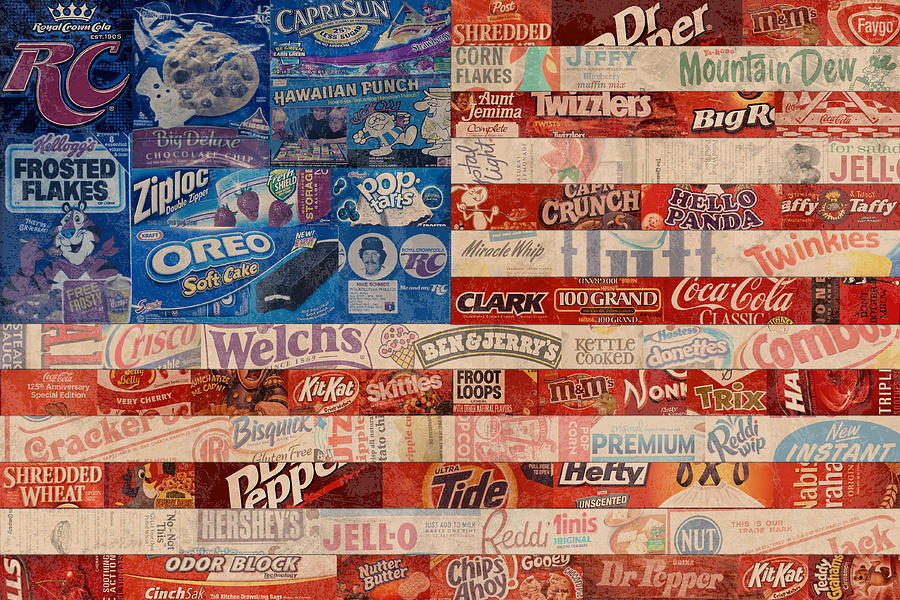
Products:
Products:
- Macdonalds
- Starbucks
- Coca Cola
- Reeses
- POP Tarts
- Oreos
- Apple
Media:
- Youtube
- Snapchat
Film/Song:
- Jaws
- Pulp Fiction
- Star Wars
- Wizard Of Oz
- Elvis Presley
- Mickey Mouse
Subscribe to:
Posts (Atom)
-
 Labour Party Green Party Liberal Democrats Brexit Party Conservative Party Scottish National Party ...
 -
Episode 4 Notes Episode is the further story of Sargent Brody an his spotlight in the media His erratic behaviour draws attention ...